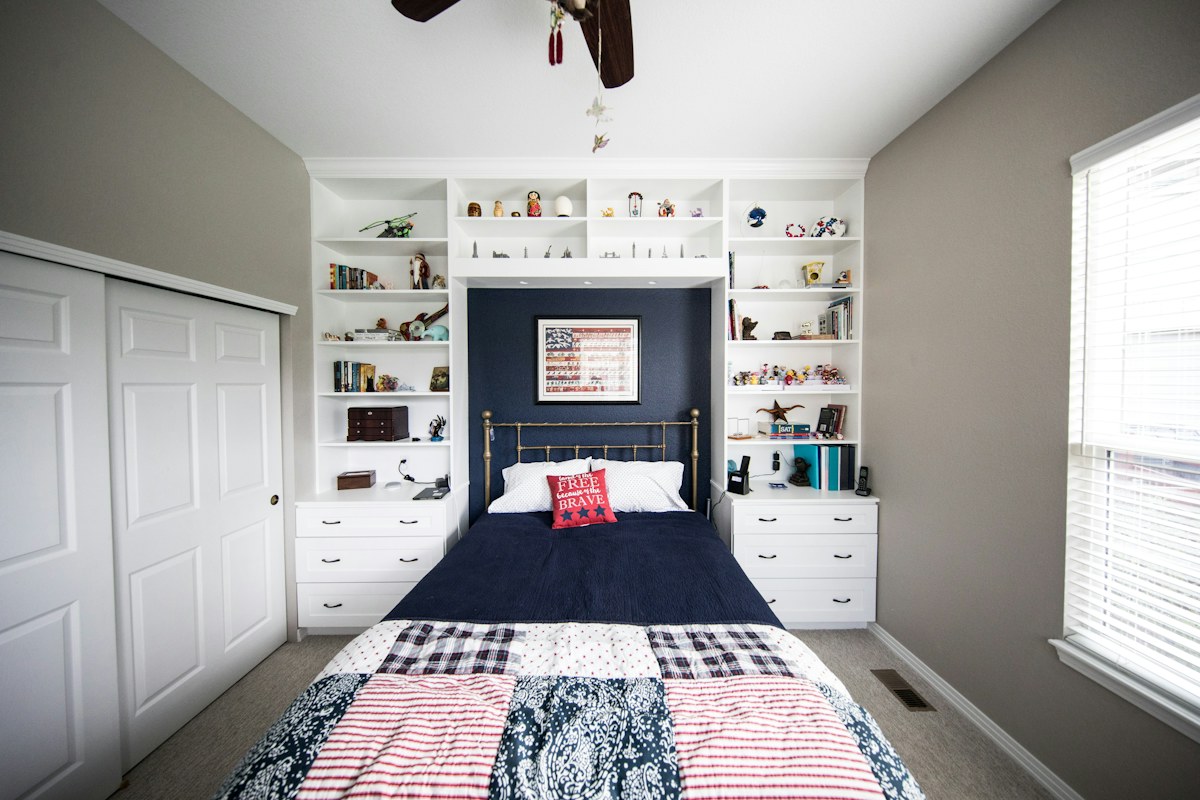

The most useful bedroom layout starts before the bed is made. Think about the first ten minutes after you wake and the last ten before you settle down. Those short stretches reveal where the room works and where it asks for unnecessary effort. You may hunt for glasses, step over yesterday's clothes, or switch on a bright ceiling light to find a charger. Decorating around these routines can improve the room without changing every surface. It also gives you a better shopping brief than an abstract wish for a restful bedroom. Start by observing what happens, then place the essentials where you need them. The room can still reflect your taste, but its arrangement will have a practical reason behind each decision.
Write down the actual sequence
For two mornings and evenings, note what you do in order. Include small actions such as opening curtains, taking off a watch, collecting tomorrow's clothes, and plugging in a device. If two people share the room, make separate lists. One person may wake much earlier, and a layout that suits the later riser can make the other's routine noisy or awkward. Mark the points where you search, retrace your steps, or disturb someone. These are the best places to begin. You do not need a complicated chart; a short list on paper is enough. Avoid designing around an ideal routine you hope to adopt someday. A room that supports your present habits can be adjusted gradually as those habits change. An attractive arrangement that assumes a different household usually becomes inconvenient very quickly.
Make the bed accessible
Position the bed so the people using it can get in, get out, and change the bedding comfortably. Check the route with drawers open and doors at their normal angles. In a tight room, a slightly smaller bedside table may be more valuable than squeezing the bed between two substantial cabinets. Consider who needs access on each side and whether mobility requirements may change. Keep the route to the door clear, including at night. Do not put loose baskets, cables, or a curled rug edge where feet land first thing in the morning. If you are considering a different bed frame, measure its outer dimensions rather than only the mattress size. A thick upholstered frame can occupy noticeably more floor space than a simple frame holding the same mattress, which matters in a compact room.
Give bedside objects defined homes
Empty the bedside surface and sort what was there. Daily essentials might include glasses, a book, water, and a light. Receipts, old packaging, and several spare chargers probably belong elsewhere. Keep the surface useful rather than trying to make it look permanently styled. A shallow dish can hold a watch, while a small drawer may protect personal items from being knocked onto the floor. Check reach from a normal lying or seated position. A table that is too low or too far away can turn a simple action into a stretch. Keep liquids away from electrical equipment. If you charge a phone overnight, follow device instructions and use a ventilated, appropriate surface rather than bedding. The right bedside arrangement is specific to the user, so a shared room does not need identical contents on both sides.
Separate worn clothes from clean clothes
A chair often becomes a clothing pile because the room has only two categories: clean wardrobe and laundry basket. Clothes worn briefly may need a third, limited destination. A few hooks or a small rail can work, provided the position is safe and does not block a door. Set a capacity that makes sense, such as a single outfit, and return or wash items before adding more. This is a staging area, not a second wardrobe. Put the laundry basket near the place where people actually undress, while allowing damp items to dry appropriately before they are stored. A basket hidden behind a difficult cupboard door is unlikely to be used consistently. If you need to move clothing through another room to put it away, consider whether the bedroom storage arrangement is asking for too many steps.
Plan light for different waking times
In a shared bedroom, individual reading lights can make different schedules easier to manage. Test where light falls when one person is in bed. A shade may look attractive but still direct brightness across the other pillow. Use suitable products and the recommended bulbs, and keep lamps away from loose bedding and curtains. Do not improvise electrical alterations. Fixed fittings and wiring should be handled by a qualified professional. Also consider the route from the bed to the door. There should be enough light for safe movement without needing to flood the entire room. Existing lamps may only need repositioning. For morning light, check how window coverings operate and whether furniture prevents them from opening smoothly. A room that is easy to use in dim conditions will often feel more comfortable at the busiest ends of the day.
Keep tomorrow's preparations in one place
If mornings are rushed, choose a small place to assemble what you need before bed. It might hold an outfit, a work bag, or the items that must leave the house with you. Keep this zone away from the route around the bed and make its limits visible. A hook is clearer than an entire spare chair that can slowly absorb unrelated objects. Do not place paperwork or equipment beside the pillow simply because that is the nearest empty spot. Where possible, work materials belong outside the sleeping area; in a multipurpose room, a closed bag or cupboard can create a clear stopping point. The purpose is to remove a few morning decisions, not to create a nightly performance of perfect preparation. Choose the items that most often cause you to search or return upstairs.
Make storage work at ordinary speed
Open the wardrobe as if you are getting dressed late for an appointment. Can you see the clothing you use most, reach it without moving a stack, and return a hanger easily? Group by the way you choose clothes, whether that means type, activity, or frequently worn combinations. Leave some space between items rather than filling the rail until nothing slides. Heavy objects should be stored safely, and tall furniture should be secured as directed. Avoid using high shelves for daily essentials if reaching them is difficult. Check whether drawers can open fully with the bed in place. Storage capacity on paper means little when furniture blocks access to it. A modest wardrobe that is easy to use can serve a room better than a larger unit that makes every morning more cumbersome.
Test the change before decorating around it
Keep the revised arrangement for a week and notice the first and last ten minutes again. Are clothes finding their intended places? Can you reach the light without stretching? Does one person still have to cross the other's path? Make a small adjustment where needed. Once the routines work, choose colors, textiles, and artwork that you enjoy seeing in this calmer arrangement. A practical room does not have to look sparse, and a decorative room does not need to be inconvenient. Let the useful structure come first. You may discover that a clear bedside surface, a better laundry position, and an easier route around the bed change the experience more than a new suite of furniture. Those improvements continue to matter long after the excitement of a makeover has passed.