A clear kitchen counter is useful only if it stays useful while someone cooks. An empty surface in a photograph says little about where a chopping board goes, how dishes move to the sink, or what happens when two people need the kettle at once. Instead of aiming for a permanently bare kitchen, plan the counter around tasks. Keep a workable preparation area, give frequently used equipment a sensible position, and make the route for dirty items obvious. You may find that a modest rearrangement solves more than another storage product. Begin with one ordinary meal and watch the objects move. The places where you keep shifting something out of the way are the places where the counter needs a clearer purpose.
Follow a meal from start to finish
Choose a meal you prepare often and list the steps: collecting ingredients, washing, chopping, cooking, serving, and clearing up. Note where each step happens now and where you lose space. Perhaps ingredients sit beside the sink because the only clear preparation area holds a toaster. Perhaps clean dishes accumulate where hot pans need to land. Keep the exercise specific rather than trying to optimize every possible recipe. A kitchen that handles its most common meals comfortably is already working well. If more than one person cooks, compare routines before moving shared equipment. One person's unused appliance may be another person's daily essential. The best counter plan accounts for these differences and leaves enough flexibility for a larger meal without making everyday preparation feel like a series of obstacles.
Protect one main preparation surface
Identify the most suitable uninterrupted area for food preparation. It should be convenient to the ingredients and washing area while allowing safe use of knives and other equipment. Clear this area of objects that do not need to live there. A decorative bowl or mail pile may seem small, but several small objects can remove the only useful stretch of counter. Check that a chopping board sits securely and that lighting is adequate. Use food-safe cleaning methods appropriate to the surface and follow product instructions. Keep raw and ready-to-eat foods separated using suitable utensils and established food safety practices. The aim is not to create a professional kitchen, but to have a reliable place to start work without first relocating a collection of unrelated items. Treat that clear space as equipment in its own right.
Give appliances a reason to stay out
List the appliances on the counter and how often each is used. A daily kettle earns its place more easily than a machine used twice a year. Consider the effort involved in storing and lifting an appliance as well as frequency; a heavy machine may need a safe permanent position. Follow each manufacturer's clearance and ventilation requirements. Keep electrical equipment away from water and heat as directed, and avoid overloaded outlets or trailing cords. Do not move an appliance into a cupboard for operation unless it is designed for that use. If safe placement is difficult, seek appropriate professional advice rather than improvising extensions around the sink. The goal is to free space without introducing an electrical or handling problem. Store occasional equipment where it can be retrieved comfortably when it is genuinely needed.
Leave a safe landing place near cooking
Cooking needs somewhere suitable for utensils, ingredients, and hot items, with materials and clearances appropriate to the equipment. Check your appliance instructions and countertop care guidance rather than assuming any nearby surface can take heat. Use suitable heat protection where required. Keep packaging, cloths, and other combustible materials away from cooking areas. Do not place an organizer where it narrows access to controls or makes you reach over heat. A crowded cooking zone can become dangerous precisely when several things happen at once. If you regularly move a stack of dishes to put down a pan, that stack needs a different home. Keep the landing area visibly available, not temporarily clear only before you begin. A useful arrangement supports the busiest moment of cooking, not just the first few minutes.
Separate the clean and dirty routes
Watch where dirty dishes arrive and where clean ones leave the drying rack or dishwasher. If those routes overlap on a small counter, assign different sides where possible. Keep enough space to unload safely without balancing items in unstable piles. A drying rack should suit the household's actual dish volume and drain appropriately without leaving water against vulnerable surfaces. Clean it according to the material and product guidance. If handwashing is frequent, consider whether the rack's position sacrifices essential preparation space and whether a smaller, more regularly emptied setup would work better. Do not block the sink or access to taps with decorative containers. The washing area needs to be straightforward to clean. An arrangement that looks tidy but traps moisture or makes routine wiping difficult is unlikely to stay pleasant for long.
Keep the useful small things close
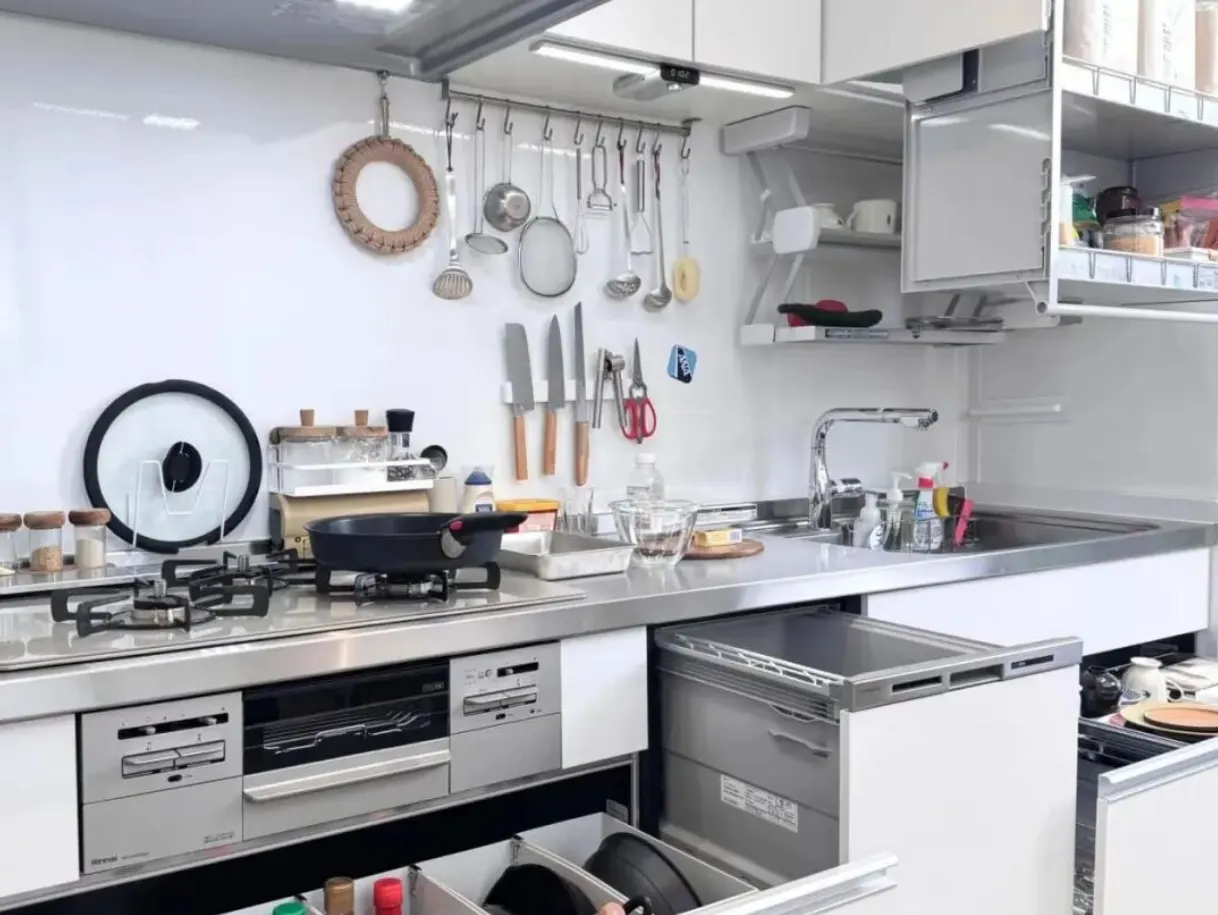
Utensils, cloths, and frequently used ingredients should be accessible without crowding every edge. Group items according to the task they support. A small container for the tools used at the hob can be helpful, but it need not contain every utensil in the kitchen. Keep sharp tools stored safely and out of reach where children are present. Check food storage instructions; sunlight, heat, and moisture can make a convenient display unsuitable for some ingredients. Labels should remain readable, including allergen and date information when relevant. Before decanting anything, decide whether the new container solves a real problem. Attractive jars can add work if they hide instructions or require repeated topping up. A good counter system reduces handling and searching, rather than turning everyday cooking supplies into a display that needs constant maintenance.
Stop paperwork at the kitchen boundary
Counters often become the household's arrival point for keys, letters, school notes, and purchases. If that happens in your kitchen, provide a small designated place outside the main preparation area. Limit its capacity and decide when it will be emptied. Important papers need a proper next destination, not an expanding series of trays. Keep cleaning products and medicines safely stored according to their labels, away from food and children. A bowl for keys should not sit where ingredients need to be handled. If the only available landing place is in the kitchen, make the distinction obvious through position rather than expecting everyone to remember an invisible rule. This protects the working surface and makes the room easier to clean without first sorting the family's entire day's worth of belongings.
Review the arrangement during a busy meal
Use the revised counter plan for several days, including one meal that stretches the kitchen a little. Notice which objects still move repeatedly and which clear areas remain useful. Adjust a single zone at a time. A tray may help group an appliance's accessories, while a less used item may be ready to leave the counter altogether. Avoid buying organizers until you know the measurements and the problem they must solve. Check that doors and drawers still open comfortably and that safe equipment clearances remain intact. The finished counter does not have to be empty. It should have enough open space to work, enough nearby storage to recover quickly, and a clear logic that the household understands. That makes the kitchen feel calmer even when dinner is underway.