In a small kitchen, storage is not just about fitting everything inside the cupboards. It is about reaching the right things without moving half the contents first. A cupboard can be technically full and practically useless. The baking tin you need every weekend may sit behind a rarely used serving platter, while everyday mugs occupy the least convenient shelf. Reorganizing by frequency gives the room a clearer logic. Keep the most-used items easy to see and retrieve, place occasional equipment where it will not interrupt daily routines, and remove things that no longer serve the household. You do not need a uniform collection of containers. You need storage that works at the pace of making breakfast, preparing dinner, and clearing up afterward.
Count uses rather than categories alone
Choose one cupboard and list what comes out of it during a normal week. Frequency can be surprising. A large mixing bowl may be used daily for salads, while a set of specialized utensils has not moved in months. Mark daily, weekly, occasional, and unused items. Keep categories in mind, but do not let them overrule convenience. It may be sensible to store one everyday bowl near the plates and the rest of the mixing equipment elsewhere. Ask everyone who cooks before declaring something unused. Different routines can be invisible to the person doing the organizing. This simple inventory provides a more reliable basis for storage than the assumption that all similar objects must occupy the same cupboard, regardless of how often anyone needs them or how difficult they are to retrieve.
Reserve the easiest zone for everyday work
The most accessible shelves and drawers should hold the things used most often. What counts as accessible depends on the people using the kitchen, including their height, strength, and mobility. Avoid placing heavy objects high or in positions that require awkward lifting. A safe low shelf may suit a heavy appliance, while lightweight occasional pieces can occupy less convenient storage. Check that doors and drawers open fully and do not collide with nearby furniture. Keep handles easy to grasp and avoid stacking so high that removing one item becomes a balancing exercise. You are not trying to make every cupboard equally full. Some should be deliberately easy to use. A little unused space around everyday dishes can make the kitchen more efficient than filling that space with seldom-used equipment simply because it fits.
Put tools near their tasks
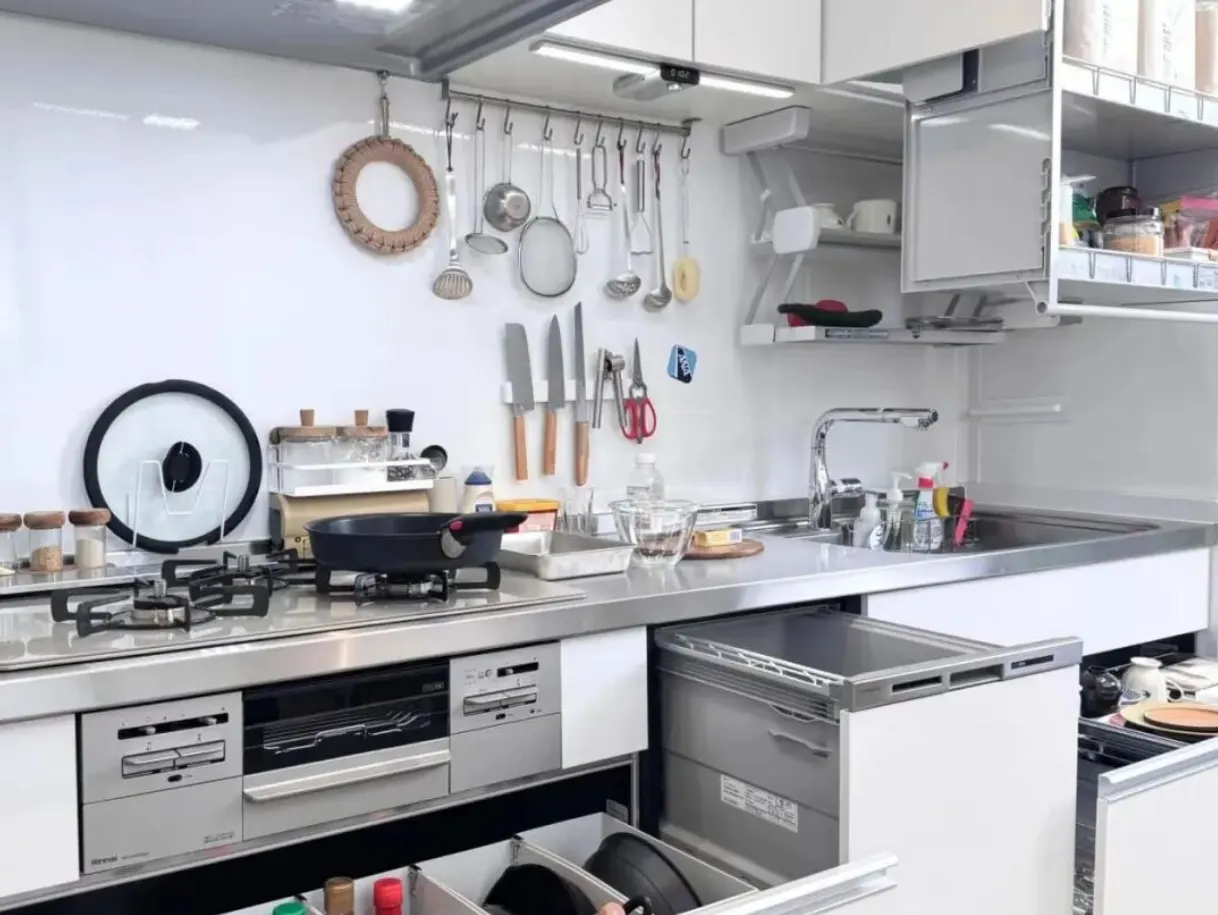
Locate common preparation tools near the preparation surface, cooking utensils near the cooking area where safe, and mugs near the usual drink-making spot. This reduces unnecessary crossings in a compact room. Follow appliance clearances and keep combustible materials away from heat. A drawer organizer can help, but measure the drawer and the actual utensils before buying one. Long handles and bulky tools may need a different arrangement from the compartments in a standard insert. Keep sharp items stored safely. If two people often work together, separate their most common tasks enough that neither has to stand in front of the other's drawer. The kitchen does not need a rigid professional system; it needs a few thoughtful relationships between where an object lives and where it is used.
Make awkward corners contain fewer things
Deep corners and high cupboards are tempting places to hide everything that does not fit elsewhere. That usually creates forgotten inventory and difficult retrieval. Put a limited, clearly identified group in an awkward area, such as seasonal serving pieces, instead of a mixture of unrelated objects. A removable container may help if its weight remains manageable and it can be lifted safely. Avoid heavy bins on high shelves. Label the visible edge where useful, but remember that a label does not make an unsafe reach acceptable. If an area is genuinely inaccessible, leave it lightly used rather than forcing it to provide maximum capacity. The cost of using every cubic inch can be repeated inconvenience or risk. Storage quality matters as much as storage volume, especially in a room used several times a day.
Reduce nesting that slows you down
Nesting bowls and pans saves space, but an excessively deep stack makes each use cumbersome. Keep the most frequently used piece near the top or in a separate accessible position. Protect surfaces as the manufacturer recommends and avoid improvised arrangements that scratch or damage cookware. Store lids so they can be identified without emptying an entire drawer. A simple vertical divider may work where the dimensions suit it, but do not buy a specialized rack before testing the available space. Consider whether all the pieces are still needed. Three similar pans may be useful for your cooking, while six nearly identical sizes may only make the storage harder. Keep based on actual use and condition rather than on the desire to own a complete set with no missing pieces.
Keep food visible and instructions intact
Food storage should make it easy to see what you have and use it appropriately. Group similar items and check dates regularly. Follow packaging instructions for storage conditions and handling. If you decant products, preserve the information needed to identify them, including allergens, preparation directions, and relevant dates. Do not top up an old container indefinitely without cleaning it appropriately and knowing what is inside. Clear containers can help, but original packaging may be the most practical choice. Place newer purchases behind older suitable stock so forgotten duplicates do not accumulate. Keep food away from cleaning products and unsuitable heat or moisture. The purpose of a pantry arrangement is to support safe, ordinary cooking, not to produce a wall of identical jars that conceals the information the household actually needs.
Give occasional equipment a realistic boundary
Specialized appliances and entertaining pieces can consume a small kitchen's best storage. Decide which ones genuinely support activities you enjoy. If an item is used infrequently but is valuable to you, give it a designated place that does not disrupt daily work. If it belongs to a possible future hobby you have repeatedly postponed, consider whether borrowing or sharing would make more sense than permanent storage. Do not discard shared belongings without agreement. For items you keep, check that accessories and instructions remain together so retrieval does not lead to a second search. A small labeled box for attachments can be more useful than several loose parts in a utensil drawer. Occasional equipment should remain available without making the everyday kitchen pay for its presence at every meal.
Test the system without explaining it constantly
After reorganizing, cook and unload dishes for several days. Notice where items land naturally. If a tool repeatedly returns to a different drawer, that may be a clue about its most convenient home. Show the household the main changes and use simple labels only where they help. A storage system that requires a long explanation is probably too elaborate for a busy kitchen. Adjust the difficult areas before buying more organizers. Leave a little room for normal variation, including groceries before they are fully put away and dishes during a meal. The best small-kitchen arrangement is easy to understand and easy to restore. When frequent-use items are within comfortable reach and occasional things stop interrupting them, the room feels more capable without gaining a single extra cupboard.