In indoor soft decoration design, decorative paintings are not only an art form, but also can add artistic atmosphere to indoor spaces. The theme, size, layout, and decoration style of decorative paintings are coordinated, and with the addition of lighting, a unique and tasteful space can be created with minimal investment.
There are some established rules and techniques for hanging decorative paintings. If hung improperly, it will greatly reduce the beauty of the painting, so it is necessary to understand some hanging techniques.
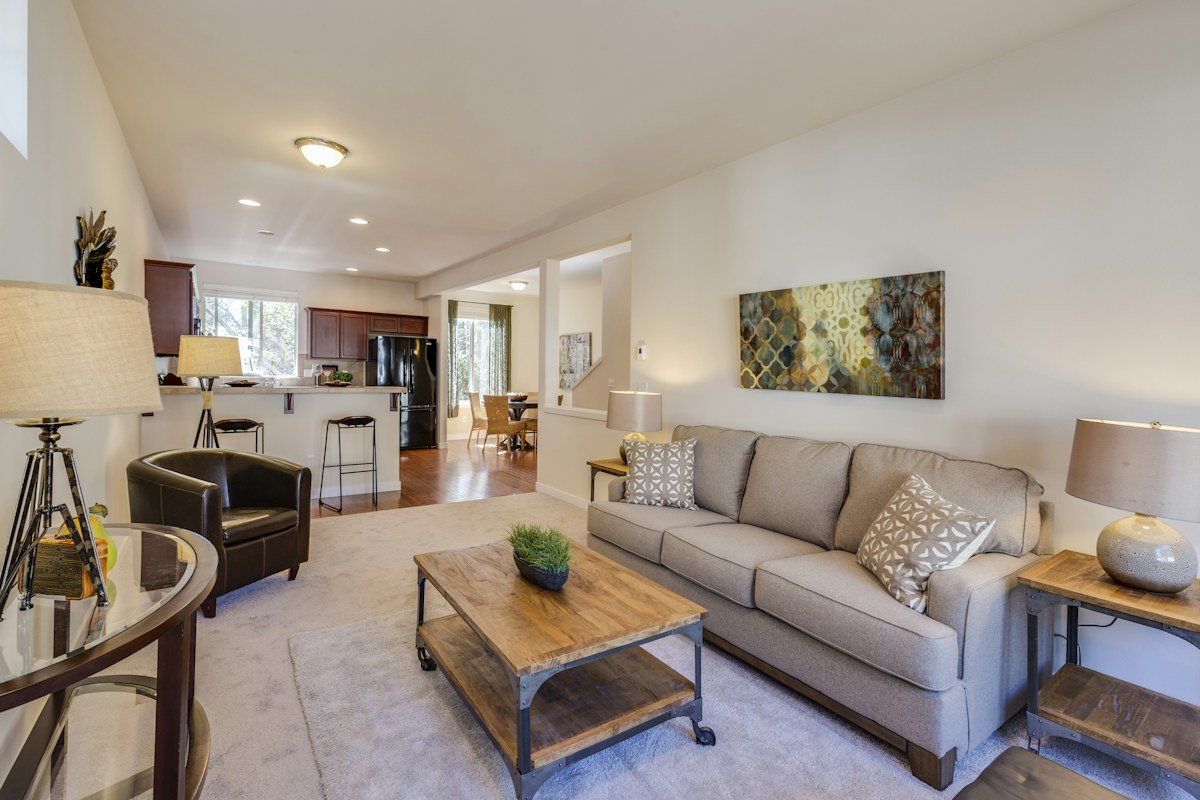
When hanging decorative paintings, it is generally recommended that the center of the painting be parallel to the line of sight or slightly higher, which is more in line with visual habits. Specifically, the center point of the hanging painting can be used as the reference point, and kept between 150cm ± 20cm from the ground. A slightly higher position than the line of sight creates a visual sense of raising the ceiling, making it more comfortable to appreciate. If there is furniture below the hanging painting, it is generally 20-30cm higher than the furniture.
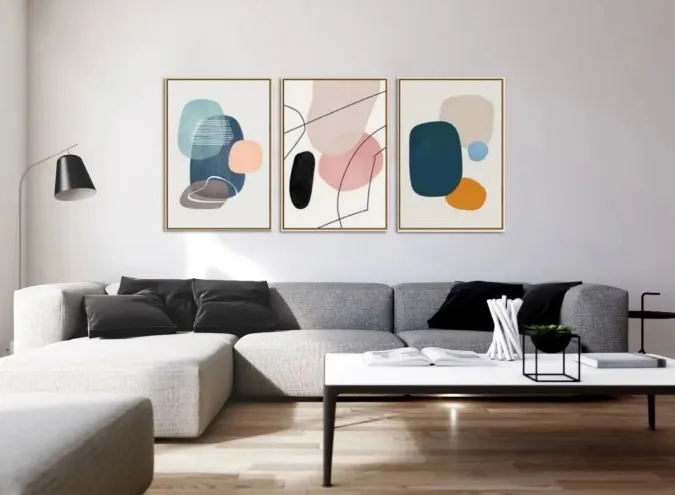
The length of hanging paintings also has its own requirements. Taking the decorative painting behind the living room sofa as an example, the length of a single hanging painting is generally 2/3-3/4 of the length of the furniture, and it is recommended that the total length of multiple hanging paintings should not exceed 2/3 of the length of the furniture. The spacing between multiple hanging paintings is controlled between 5-20cm, and the size of the painting is proportional to the distance. The larger the size of the painting, the greater the spacing.
A single painting is usually hung in the center as a square or rectangular painting, and vertically long paintings can also be hung without being centered. A single large decorative painting is often the focal point of a space, without the interference of multiple paintings, making it easier for viewers to savor it carefully.
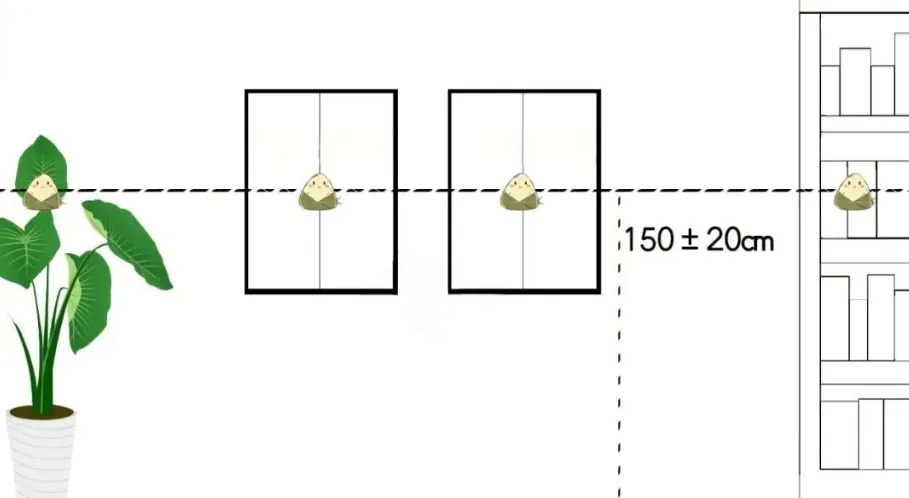
Two hanging paintings should be arranged in pairs, and the spacing should be controlled within 5-20cm according to the size of the two paintings. This distance can focus the line of sight, making the two paintings appear as a whole. If two hanging paintings are too far apart, they will form two visual focal points, resembling two separate hanging paintings. Two paintings can be arranged symmetrically on the left, right, top, and bottom, and generally there are more symmetrical arrangements on the left and right.
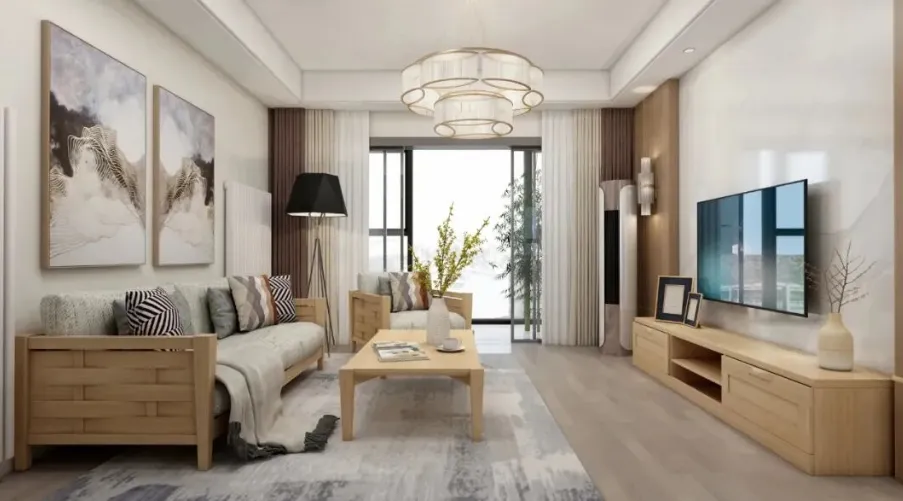
Three or four hanging paintings of the same size are usually arranged side by side or symmetrically vertically, with a neat and uniform visual effect without disorder.
When the wall requires four or more hanging paintings of different sizes, the method of aligning the horizontal lines can be used. The size of the hanging paintings varies, but the bottom is all on the same horizontal line. This hanging method with a flat bottom creates a strong sense of casualness. The best theme to express in all hanging paintings is unity, and the frame style and color are also consistent, which will result in a better overall decorative effect.
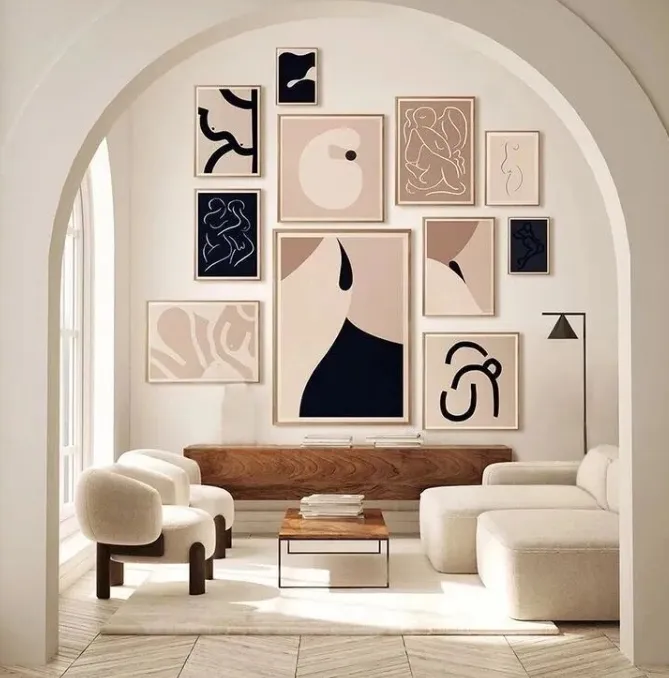
Horizontal alignment is also a common method. The top of the hanging painting is all on the same horizontal line, which is visually dynamic and not messy.
The alignment of the center line is suitable for hanging all decorative paintings in two rows, with the upper row arranged with the center line as the bottom line and the lower row arranged with the center line as the upper line. The spacing between the two rows of hanging paintings should be uniform, and the size of the hanging paintings should be balanced to avoid situations where one side is light and the other is heavy. This hanging style concentrates the upper and lower rows of hanging paintings towards the center line, providing strong flexibility and suitable for large wall surfaces.
The radial hanging method is to select a large-sized decorative painting as the center as the main painting, and hang some small paintings around it in a divergent arrangement. This hanging method is suitable for living rooms and study rooms, with a dynamic and layered feel.
Free placement refers to placing decorative paintings on the entrance cabinet, dining cabinet, or in the corner of the wall. The size does not need to be uniform, and can be matched according to the space. In addition, there are box hanging method, grid hanging method, staircase hanging method, etc.
Ordinary families do not have particularly high requirements for home decoration, and the several decorative painting hanging methods shared above are basically sufficient. If there are special requirements, it is recommended to consult a professional soft furnishing designer. The most important principle for hanging and arranging decorative paintings is visual balance, which coordinates and unifies the painting, furniture, and space, and enhances the aesthetic value of the space.