
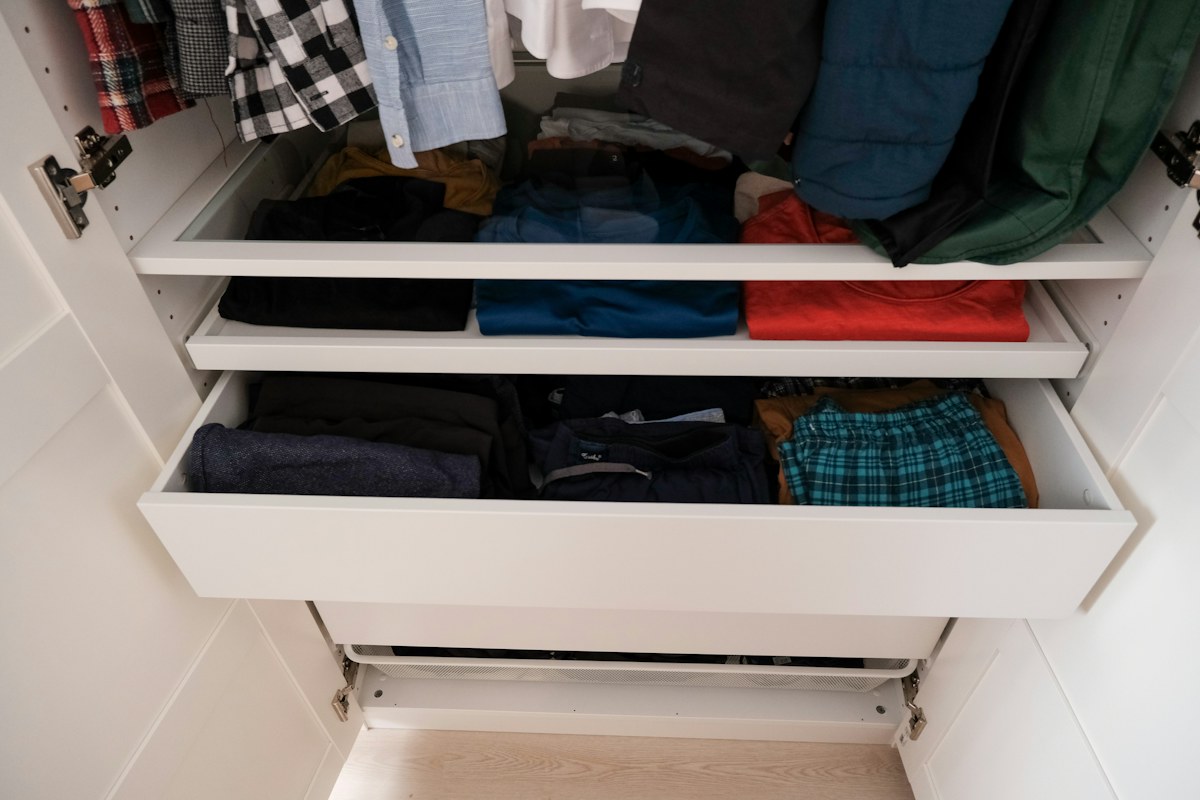
A useful wardrobe does not need to contain a prescribed number of garments or resemble a shop display. It needs to make getting dressed easier for the person using it. That means keeping current clothes visible, making returns straightforward, and giving occasional items a sensible place. If a wardrobe repeatedly becomes untidy, the problem may be the arrangement rather than a lack of effort. Rails can be too tightly packed, drawers too deep, or everyday clothing stored above a comfortable reach. Start with a normal week's clothing and laundry instead of emptying everything into an ambitious sorting marathon. You can learn a great deal from what leaves the wardrobe, what returns, and what sits untouched while the same few items rotate through use.
Track what you actually wear
For a week or two, notice which clothes you select and why. Include work, home, exercise, and occasional responsibilities that happen regularly. Weather and laundry schedules affect the sample, so treat it as a starting point rather than a verdict on every garment. Set the most-used items together temporarily and see how much space they need. This reveals the wardrobe's active core. It may include several similar items because your routine genuinely requires them. Avoid copying someone else's wardrobe formula if their work, climate, and preferences differ. The purpose is not to prove that most of your clothing is unnecessary. It is to give the clothes that serve current life a convenient position, then make deliberate decisions about the rest without rushing or turning the process into a rule-driven exercise.
Clear the easiest storage first
Choose a single drawer, rail section, or shelf. Remove its contents and clean the area appropriately. Return the items used most often in a way that lets you see and retrieve them. A drawer may work better with fewer categories than with many tiny compartments. On a rail, leave enough room for hangers to move rather than compressing everything into a solid block. Check the height and depth of the space against the clothes. Long garments need clear hanging length, while folded stacks should remain stable and easy to lift from. Keep heavy items low and secure tall furniture according to guidance. Finishing one useful section is more valuable than creating a room full of unsorted piles. It also shows you what kind of arrangement your remaining storage should support.
Make a careful decision about the inactive clothes
Clothes that are not currently worn may still have a legitimate role: seasonal use, formal occasions, changing circumstances, or sentimental value. Separate those reasons instead of treating every inactive item as clutter. Check condition and fit without forcing an immediate decision on anything emotionally significant. A small review box with a date can create a pause, provided it has a clear limit and is revisited. Items suitable for donation should be clean and meet the recipient organization's requirements. Damaged textiles may need a different local reuse or recycling route. Do not donate someone else's possessions without agreement. The point of reviewing inactive clothing is to understand what the wardrobe is holding and why. Once that is clear, storage can reflect the difference between daily use, occasional need, and deliberate keeping.
Put the return journey at the center
Most wardrobe systems look reasonable when freshly arranged. The test is whether clothes return easily on a busy day. If a shirt needs several folds to fit a narrow compartment, it may end up on a chair instead. If hanging requires moving a crowded row, people may leave the garment outside. Simplify the action. Use appropriate hangers, accessible drawers, and categories broad enough to remain understandable. Keep laundry baskets near the place where clothing is removed, with suitable handling for damp items. Allow a small defined place for clothes that have been worn briefly and will be worn again. Limit this staging area so it does not become a second wardrobe. A system that makes putting away easy will usually stay useful longer than one whose main achievement is looking impressive immediately after sorting.
Use dividers only where they solve a problem
Drawer dividers can help small items stay visible, but they also consume space and can impose awkward sizes. Measure the drawer and sort the contents before choosing them. A simple removable box may be enough for socks or accessories. Avoid buying a full set of organizers before you know the categories and quantities. For folded clothes, choose an arrangement that suits the fabric and allows retrieval without collapsing neighboring piles. Follow garment care guidance and avoid hanging items in ways that stretch them. Keep delicate or occasional pieces protected appropriately rather than squeezing them into a daily section. The organizer should adapt to the clothes and the user. If you find yourself folding around the product's dimensions in an inconvenient way, the container may be creating more work than it removes.
Make seasonal changes modest and visible
Seasonal storage helps when the wardrobe is genuinely short of space, but frequent transfers can become a chore. Keep transition pieces accessible and store only what is clearly out of use. Clean and dry items according to their care instructions before storage. Choose suitable containers and conditions for the materials, avoiding damp or extreme environments. Label the contents specifically enough to retrieve a coat or blanket without opening every box. Do not place heavy containers where lifting them is awkward or unsafe. A short inventory can prevent duplicate purchases when an item is simply stored elsewhere. If your climate changes unpredictably, a fully divided summer and winter wardrobe may be less useful than a flexible arrangement with a small seasonal reserve. Let the system reflect local conditions and your actual habits.
Leave space for the next laundry return
After arranging the wardrobe, imagine the clean laundry arriving all at once. Is there room for the clothes currently in the wash? A wardrobe can appear comfortably full only because a significant portion of its contents is elsewhere. Leave enough capacity for the whole working collection. Put returned laundry away in complete small batches rather than allowing a permanent transfer pile to develop. If the process remains difficult, inspect the storage height, drawer access, and category sizes. Do not assume the answer is another basket. Containers can conceal an unfinished journey while occupying the floor. A realistic wardrobe plan includes garments in use, in the wash, and waiting to return. That broader view helps you distinguish a temporary busy week from a storage arrangement that is consistently too crowded.
Review by friction, not by perfection
After a few weeks, notice what is easier and what still causes searching or piles. A repeatedly untidy drawer may need fewer contents or a different position. A rarely opened section may be fine if it serves a clear occasional purpose. Make one adjustment rather than restarting the whole wardrobe. Keep the labels and categories simple enough for the people who use them. You do not need every shelf to look equally full or every hanger to match. The important result is that clothing can be chosen, used, cared for, and returned without unnecessary effort. A wardrobe reset succeeds when it supports an ordinary week and survives the next one. Its appearance can be pleasing, but the deeper improvement is the small amount of time and attention it gives back each day.