The entryway is where a household changes from outside to inside. Bags come off, shoes are removed, keys land somewhere, and post arrives with nowhere obvious to go next. Because these actions happen while people are tired or in a hurry, an entryway system needs to be simpler than almost any other storage arrangement in the home. A narrow shelf or basket can help, but only when its purpose and limits are clear. Otherwise it becomes a smaller version of the same pile. Start by watching what crosses the threshold during an ordinary week. Then give the most frequent items an easy route in and an equally clear route out. The aim is a reliable transition space, not a miniature room filled with furniture.
List what arrives and what leaves
Write down the objects that regularly appear near the door: keys, shoes, work bags, shopping bags, jackets, dog-walking supplies, letters, and borrowed items. Separate daily essentials from occasional clutter. A parcel waiting to be opened is different from a key that needs a permanent home. Note who uses the entrance and whether their needs differ. Children may need reachable storage, while someone with limited mobility may need an unobstructed route and a suitable place to sit. Do not begin by buying a large hall unit. The inventory may show that a few hooks and a small tray are enough. It may also reveal that the door area is absorbing objects that belong elsewhere because their proper storage is difficult to use. Solving that distant problem can be more effective than expanding the entryway.
Protect the route before adding storage
Measure the door swing, the main walking path, and any required access to controls or building services. Keep emergency exits and shared building routes clear. A cabinet that looks slim in a product image may be intrusive when a door opens or two people pass. Test a footprint with a surface-safe temporary marker before purchasing. Avoid sharp corners in the busiest route and unstable furniture that can be knocked during arrival. Follow anchoring instructions for tall units and use appropriate installation methods. Loose rugs can become a problem if they curl, slide, or catch the door, so choose suitable products and check them regularly. The entryway's first responsibility is safe passage. Storage that interferes with that role is too large or in the wrong place, however much it promises to contain.
Give keys one precise destination
Choose a small, consistent place for keys and other daily access items. It should be convenient for the household while avoiding unnecessary exposure to passersby or access through a letter opening. Consider security as well as convenience. A shallow dish, secure hook arrangement, or small closed compartment can work depending on the setting. Keep spare keys and sensitive items appropriately stored rather than adding them to an open display. Make the destination specific enough that a key does not disappear beneath papers or gloves. If more than one person shares the space, allow for separate sets without making the arrangement complicated. The useful habit is the same each time: arrive, place the key, and find it there when leaving. A larger container usually adds capacity without improving that essential reliability.
Limit shoes to the current rotation
The entrance rarely needs to hold every pair in the household. Choose a realistic number for current everyday use and store the rest elsewhere in suitable conditions. Wet or muddy footwear needs appropriate drying and cleaning before enclosed storage. Keep moisture away from surfaces that may be damaged and avoid blocking ventilation. A shoe rack should be stable and fit the actual footwear, including boots or larger sizes. Check whether shoes can be removed and returned without pulling out the whole row. If the household removes shoes at the door, a suitable seat may help, but it must be stable and positioned without obstructing movement. A small current rotation is easier to manage than a full collection squeezed into the most frequently crossed part of the home.
Make bag and coat storage easy to use
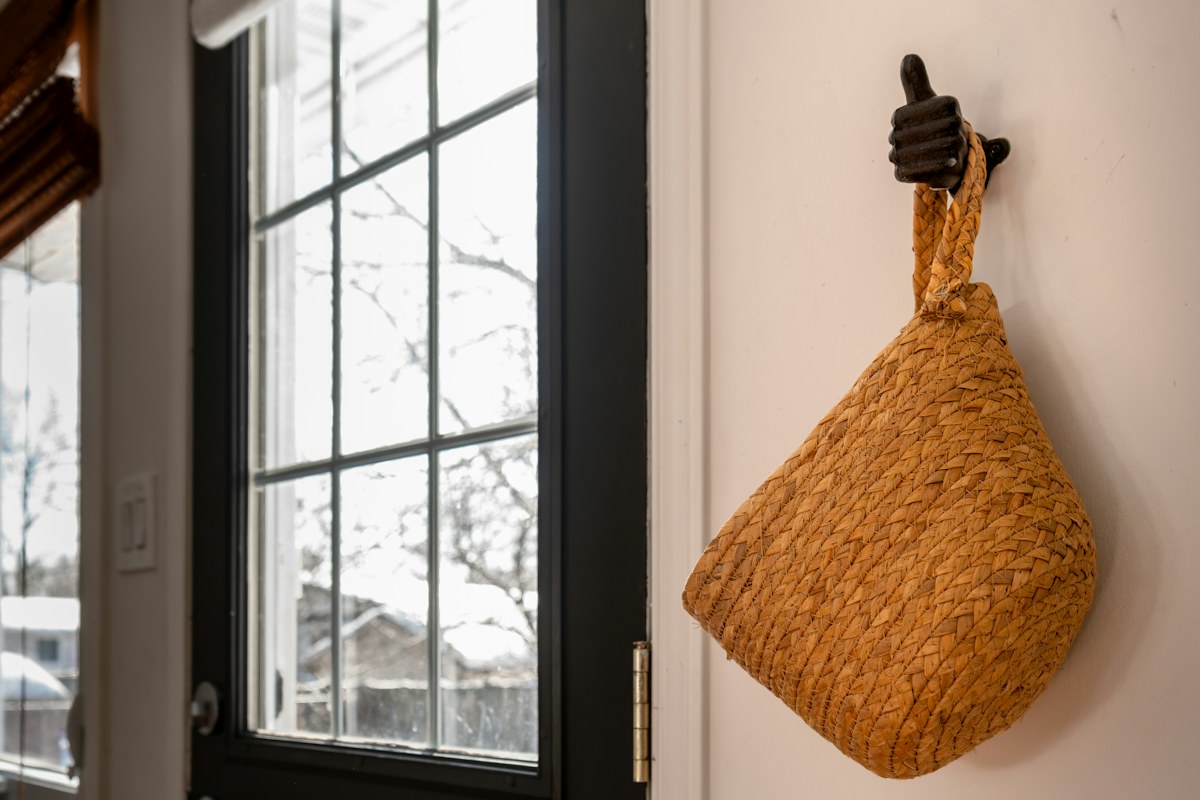
Place hooks or other storage at useful heights and install them according to the product and surface requirements. Do not overload hooks or rely on unsuitable adhesive fittings for heavy bags. Keep frequently carried items accessible without layering several coats over each other. If the entry is very small, allow one current coat and one daily bag per person, with occasional items stored elsewhere. The exact limit depends on the household, but a visible boundary helps. Avoid floor piles that migrate into the route as bags are added. If a bag contains valuables or confidential materials, choose secure storage appropriate to its contents. The best arrangement supports the simple act of hanging or placing an item immediately on arrival. If it requires rearranging several other belongings, it will be bypassed when someone comes home carrying groceries.
Give post a next step, not a permanent home
Letters and paperwork need a short processing route. Remove packaging and unwanted material through appropriate disposal or recycling, protecting personal information. Put items requiring action in a defined place outside the food preparation area and away from the doorway's daily traffic. A small inbox can be useful if it is reviewed regularly and has a clear capacity. Avoid several trays whose labels conceal the same deferred decision. Important documents should move to secure storage once handled. If the entryway receives school notes or delivery paperwork, decide who checks them and when. The physical container cannot assign that responsibility. A modest routine prevents paper from spreading across the key tray, shoe storage, and every nearby horizontal surface. The door area should help information enter the household, not become its final archive.
Create an obvious place for outgoing items
Returns, library books, reusable shopping bags, and things promised to someone else need to leave again. Give them a small separate departure point that does not block the exit. Keep it distinct from permanent entryway storage so the objects remain visible as unfinished journeys. Add a reminder to the relevant trip if that helps; simply placing something near the door is not always enough. Avoid leaving valuables or sensitive items unattended in a public or shared entrance. Empty the outgoing area regularly rather than allowing it to become overflow. Its size can be deliberately limited. If an object remains there for weeks, decide on a specific next action. A good entryway handles movement in both directions, and a clear departure place prevents returning items from becoming permanent residents beside the shoes.
Keep the reset short and observable
At a convenient point each day or several times a week, restore the entryway's basic limits. Return extra shoes, move papers onward, and check that the route is clear. Ask household members to handle their own items where practical. If the area repeatedly overflows, examine what category is growing and why. It may need a better home elsewhere rather than a larger entryway container. Adjust one part of the system at a time and keep the labels plain. The success of a drop zone is measured during a rushed departure: keys are found, the right bag is ready, and the door opens without moving a pile. When the arrangement supports those ordinary moments, a small entryway can feel generous even without much furniture or floor space.