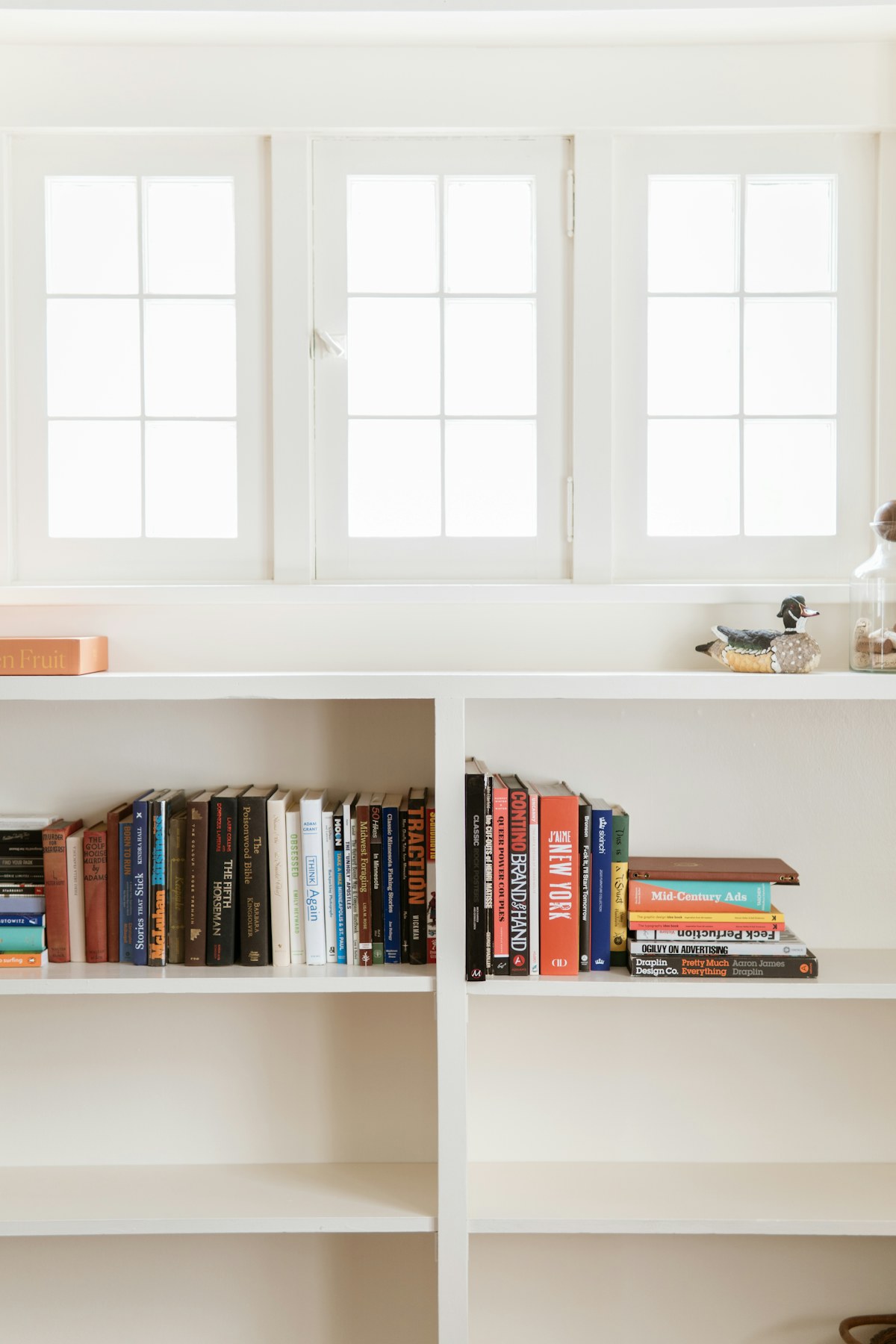
Bookshelves are often arranged for how they look across the room, then used in a much less orderly way. A current book stays on the sofa because there is no convenient place to return it. Borrowed titles mix with owned ones. A carefully balanced stack has to be dismantled to reach the volume at the bottom. A useful shelf can still be attractive, but access should come first. Start by deciding how you look for books and which ones you reach for often. Then make room for the collection to change. The goal is not a rigid catalog or a decorative formula. It is a shelf that helps you find, read, and return books while letting the room retain the character of a real reading household.
Decide how you search for a book
People remember books in different ways. Some look for an author, others for a subject, a cover, or the period of life when they read it. Choose a broad arrangement that fits your own habits. Fiction by author and nonfiction by subject may work, but there is no requirement to use a library-style system at home. Keep categories large enough to remain practical. If a household shares the shelves, agree on the main divisions so returning a book does not require guessing. Small labels can help in a large collection, but avoid creating more categories than the shelves can hold comfortably. A good system should answer the question you actually ask when looking for a book. If you always remember a cookbook by its cuisine, arranging those titles purely by spine color may be visually pleasing but inconvenient.
Check the furniture before filling it
Inspect the shelves for stability, damage, and stated load limits. Books are heavy, and a shelf intended for light display objects may not suit a dense row of large volumes. Follow the manufacturer's guidance and secure tall furniture as directed using appropriate methods for the wall and product. Seek help if the construction or fixing is uncertain. Keep heavy items low and avoid overloaded high shelves. Do not block ventilation, heaters, or access routes. Check that doors and drawers, if present, work with the surrounding layout. This practical inspection matters before styling because a tidy arrangement cannot compensate for unsuitable furniture. If a shelf bows or a unit moves unexpectedly, remove it from use and have the problem assessed rather than treating it as a minor visual imperfection.
Give frequent reading the easiest reach
Put the books used most often where they can be retrieved comfortably. Current reference books, favorite cookbooks, or titles used with children may deserve a lower, more accessible position than rarely opened collections. Consider the height and abilities of the people using the shelf. Avoid heavy stacks that must be lifted from above shoulder level. If books are arranged horizontally, keep the stacks modest enough that retrieval is simple and the contents remain protected. A small separate place for current reading can prevent books from accumulating on every surface. It might be one section of shelf or a nearby stable basket. Keep its capacity limited so it reflects active reading rather than becoming a holding area for the entire collection. Accessibility is a reason to break a decorative pattern when the pattern gets in the way.
Separate borrowed and departing books
Borrowed books need an obvious home so they can be returned on time and kept distinct from owned copies. A small labelled section or a clear place near the room's exit can work, provided it is safe and does not create a pile in the walkway. Keep any due-date information where you can find it. Books intended for donation, sale, or return should have a different temporary destination and a planned next step. Otherwise they tend to drift back onto the shelves. Check the requirements of a receiving organization before donating, especially for damaged or outdated materials. Avoid passing on items that are unsuitable for reuse. A clear distinction between staying, borrowed, and leaving books makes the permanent collection easier to understand without requiring a complicated inventory of every title in the home.
Leave room for a changing collection
A shelf packed from end to end may look abundant, but it leaves no space for returning books or adding a new interest. Create modest gaps within the system so the collection can shift. These need not be large decorative voids. A little spare width in several categories can prevent one new book from triggering a complete rearrangement. Review duplicates and books that no longer serve a purpose, while keeping sentimental choices deliberate. Do not feel obliged to discard a book because it has not been read recently. The question is whether you want it to occupy part of your finite shelf space. A collection can include memory, reference, and pleasure as well as immediate use. Leaving room is about making those choices visible rather than allowing storage pressure to make them accidentally.
Add objects without blocking the books
A few objects can make shelving feel personal: a small ceramic piece, a framed photograph, or something collected on a meaningful occasion. Place them where they do not have to be moved every time a book is taken out. Avoid unstable arrangements, heavy objects above head height, and anything fragile where children or pets may knock it. Give a distinctive object a little surrounding space instead of filling every gap with a smaller ornament. If the shelf is primarily for reading, keep that function obvious. Decorative bookends should actually support the books safely and suit their weight. A shelf can feel composed through rhythm and proportion without turning every row into a display vignette. The most successful objects are the ones you enjoy seeing while the books remain easy to use.
Protect the collection through placement and care
Consider the environment around the shelves. Strong prolonged sunlight, damp conditions, and nearby heat can affect books and other materials. Choose a suitable position and follow appropriate conservation advice for valuable or delicate items. Avoid storing books against a surface with an unresolved moisture problem. Keep ordinary dusting practical by leaving access to the shelf edges and not crowding them with tiny objects. Handle books carefully and use suitable support rather than forcing oversized volumes into a narrow gap. If a book has mold, pest damage, or other concerning deterioration, seek reliable specialist guidance rather than spreading it through the collection. Routine care is easier when the shelves are not packed to their limit. A little space improves both everyday retrieval and the ability to notice a problem early.
Let use refine the arrangement
Live with the reorganized shelves for a month and notice where books return naturally. A category that keeps overflowing may need more room; a current-reading section may be too small or too far from the chair. Adjust those practical details before restyling the whole unit. Take a simple photograph if you want to compare the overall balance, but judge success by how often you can find a title without searching several rooms. The shelves do not need to remain untouched to be well organized. A book out on the table may be evidence of use. What matters is that it has a clear place to return. When the system supports reading and ordinary change, the visual character tends to follow: a collection looks more convincing when it is arranged for the life it actually has.